
October 14, 2026 model refresh
This release reflects the latest substantive value changes produced by the public data pipeline. It checks current teams, availability, depth signals, risk labels, and both redraft and dynasty tiers.
October 14, 2026 is the last date at least one numeric player value changed. A source check with no material value movement does not advance this date or add a fake changelog entry.
Current October 14, 2026 release
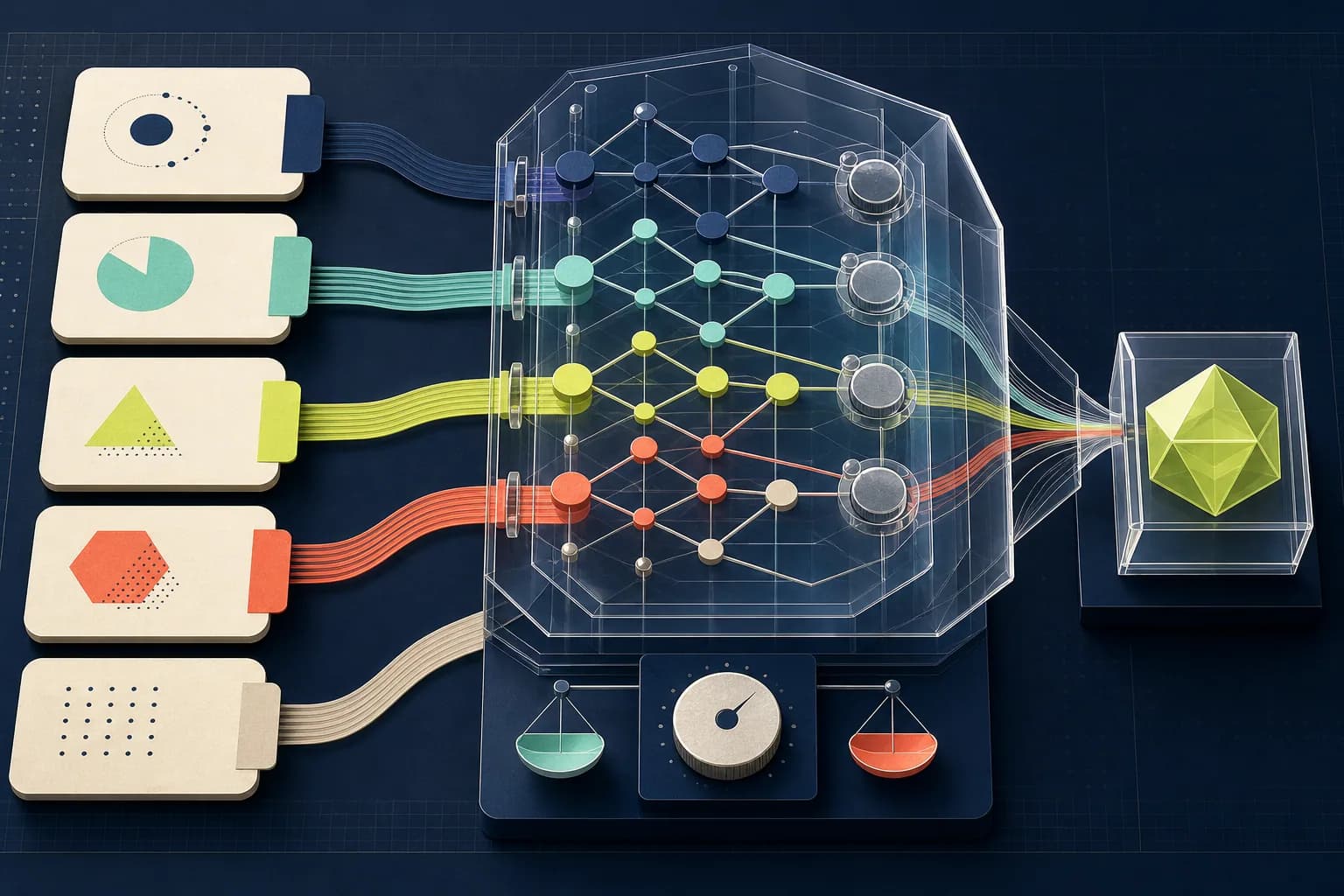
The current model covers 220 players and future picks. Core assets receive individual review. The expanded player pool begins with a transparent position tier, then adjusts for career window, format, risk, and the roster direction selected in the analyzer.
The committed JSON is the only source used by the homepage, tools, value chart, structured data, and sitemap. A weekly GitHub Action and the manual emergency command both run the same deterministic Sleeper-backed refresh and write a reviewable diff report.
Material changes are recorded, not hidden
| Date | Model area | Change |
|---|---|---|
| Oct 14, 2026 | Rosters | Synced 2 verified team changes from Sleeper. Marvin Harrison Jr.: ARI→HOU; Joe Mixon: SEA→FA. |
| Oct 14, 2026 | Player values | Recalculated 37 assets from Sleeper availability and depth signals. Largest moves: Michael Pittman Jr. (54→42 redraft, 57→53 dynasty); Jayden Daniels (85→91 redraft, 94→96 dynasty); Ja'Marr Chase (91→97 redraft, 95→97 dynasty); Justin Jefferson (85→91 redraft, 91→93 dynasty); Marvin Harrison Jr. (82→76 redraft, 89→87 dynasty); T.J. Hockenson (78→72 redraft, 74→72 dynasty). Trigger: scheduled weekly refresh. |
| Oct 7, 2026 | Rosters | Synced 1 verified team changes from Sleeper. Joe Mixon: FA→SEA. |
| Oct 7, 2026 | Player values | Recalculated 40 assets from Sleeper availability and depth signals. Largest moves: Tank Bigsby (50→37 redraft, 59→55 dynasty); Joe Mixon (47→59 redraft, 41→45 dynasty); Xavier Legette (37→29 redraft, 49→46 dynasty); Saquon Barkley (91→85 redraft, 74→72 dynasty); Ja'Marr Chase (97→91 redraft, 97→95 dynasty); Travis Etienne Jr. (46→40 redraft, 53→51 dynasty). Trigger: scheduled weekly refresh. |
| Oct 2, 2026 | Rosters | Synced 3 verified team changes from Sleeper. J.J. McCarthy: MIN→NYG; Austin Ekeler: FA→WAS; Jerome Ford: MIN→FA. |
| Oct 2, 2026 | Player values | Recalculated 44 assets from Sleeper availability and depth signals. Largest moves: De'Von Achane (91→79 redraft, 90→86 dynasty); Jack Bech (61→50 redraft, 70→67 dynasty); Jalen McMillan (38→27 redraft, 47→44 dynasty); Jaxson Dart (52→44 redraft, 64→61 dynasty); Jayden Reed (69→61 redraft, 81→78 dynasty); Alec Pierce (34→26 redraft, 40→37 dynasty). Trigger: local-source-refresh. |
| Sep 30, 2026 | Rosters | Synced 1 verified team changes from Sleeper. J.J. McCarthy: MIN→NYG. |
| Sep 30, 2026 | Player values | Recalculated 45 assets from Sleeper availability and depth signals. Largest moves: De'Von Achane (91→79 redraft, 90→86 dynasty); Jack Bech (61→49 redraft, 70→67 dynasty); Rico Dowdle (31→20 redraft, 36→32 dynasty); Jaxson Dart (52→44 redraft, 64→61 dynasty); Alec Pierce (34→26 redraft, 40→37 dynasty); Justin Jefferson (91→85 redraft, 93→91 dynasty). Trigger: scheduled weekly refresh. |
| Sep 23, 2026 | Rosters | Synced 10 verified team changes from Sleeper. Will Levis: TEN→NYJ; Kaleb Johnson: PIT→GB; Najee Harris: FA→NYG; Jaydon Blue: DAL→PHI; Jerome Ford: WAS→MIN; Stefon Diggs: FA→WAS; Cedric Tillman: CLE→NO; Jonnu Smith: FA→GB; Zach Ertz: FA→PHI; Chigoziem Okonkwo: TEN→WAS. |
| Sep 23, 2026 | Player values | Recalculated 68 assets from Sleeper availability and depth signals. Largest moves: David Njoku (73→60 redraft, 59→55 dynasty); A.J. Brown (86→74 redraft, 78→74 dynasty); James Conner (69→57 redraft, 55→51 dynasty); Isiah Pacheco (63→51 redraft, 66→62 dynasty); Joe Mixon (59→47 redraft, 45→41 dynasty); Zach Charbonnet (53→41 redraft, 62→58 dynasty). Trigger: P0 pipeline launch. |
| Aug 7, 2026 | Player values | Recalibrated redraft and dynasty tiers using fresh preseason market signals. |
| Aug 7, 2026 | Rosters and rookies | Updated verified team changes and added key 2026 rookies to the searchable pool. |
| Aug 7, 2026 | Data transparency | Published searchable values, tiers, risk notes, and format gaps for all 220 assets. |
| Jul 25, 2026 | Asset coverage | Expanded from 42 to 220 assets. |
| Jul 25, 2026 | League size | Added 8–16 team quarterback scarcity adjustment. |
| Jul 25, 2026 | Team window | Added contender, balanced, and rebuilder lenses. |
| Jul 25, 2026 | Packages | Retained transparent diminishing multi-asset weights. |
Fresh sources inform the model; they do not replace judgment
The current model cross-checks roster data against the Sleeper NFL player feed and uses ESPN, FantasyPros, and Rotoworld rankings as independent market signals. Fantasy Trade Pilot does not copy any one ranking: it converts those signals into its own 0–100 baselines, then applies the settings and package logic described in the methodology.
- Sleeper API documentation for roster-state checks.
- ESPN 2026 PPR Superflex cheat sheet for preseason market context.
- FantasyPros dynasty Superflex consensus for a second dynasty signal.
- Rotoworld 2026 top 200 for an independent redraft check.
How an asset moves between updates
Values can move when role, availability, team environment, contract security, age curve, or market liquidity changes. A short-lived box score spike is not enough on its own. The model looks for a change that affects future usable production or the price another manager is likely to demand.
- Confirm the underlying event and the player's current status.
- Estimate the effect on role, replacement value, and career runway.
- Compare the player with neighboring assets in the same tier.
- Review downstream effects on teammates and position scarcity.
- Publish the update date and document material model changes.
Tier baselines are estimates, not false precision
Expanded depth assets use a consistent tier framework so users can include more realistic trade pieces. That does not mean the difference between two adjacent values is scientifically exact. The result is a structured starting point that should be combined with local league demand and roster context.
Team abbreviations and depth roles can change quickly. The visible value date marks a real numeric change, not a new human review. Roster synchronization and editorial data review have separate dates above. Confirm breaking news before accepting a deal.
Looking for a calculator rather than the update log?
This page records model maintenance. It is not the destination for running a redraft or PPR trade. Use the relevant analyzer below to build both sides, change the scoring assumptions, and inspect an actual result. The changelog date reflects changes in the dataset; reviewing the explanation on this page does not create a new player-value update.
For current-season offers, use the redraft trade calculator. Test reception assumptions in the PPR and half PPR trade analyzer, or evaluate a mixed package in the trade analyzer with draft picks. Before accepting, save a final-offer review. Comparing tools? Read the trade analyzer comparison guide.
Put the framework to work
Change the league settings, build both sides, and inspect the value gap before you send the offer.